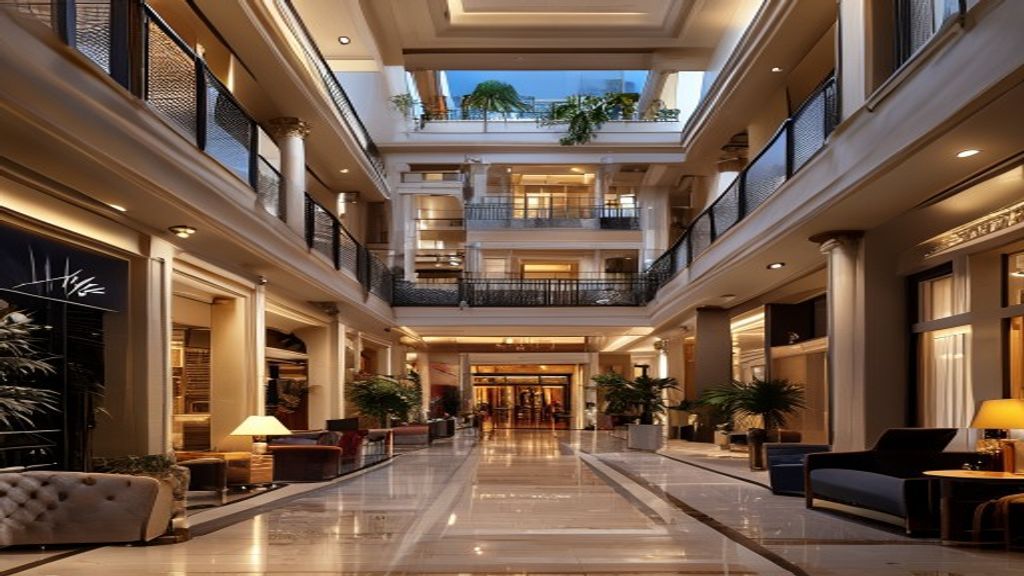
“Delhi-NCR is facing a critical supply crunch in Grade-A retail real estate. Explore our deep-dive analysis on how HNIs and family offices can capitalize on this demand-supply gap.”
📊 Executive Summary: The Structural Retail Disconnect
The Delhi-National Capital Region (NCR) is witnessing an unprecedented divergence between consumption-driven retail demand and institutional-grade real estate supply. As affluent consumer demographics expand across Gurugram, Noida, and South Delhi, global brands and domestic category leaders are aggressively competing for premium physical storefronts. However, a structural supply crunch looms large.
For High-Net-Worth Individuals (HNIs) and family offices, this supply-demand mismatch presents a highly lucrative window. With land availability in prime micro-markets virtually exhausted and regulatory and construction delays holding back new mall completions, existing and near-completion Grade-A retail assets are poised to capture significant rental premiums.
🔍 Dissecting the Deficit: Land Constraints and Delayed Completions
📍 Extreme Land Scarcity in Prime Micro-Markets
The primary bottleneck restricting the expansion of Grade-A retail is the absolute scarcity of commercial land parcels in established submarkets. In key corridors such as Golf Course Extension Road (Gurugram) and Sector 18 (Noida), land monetization has reached near-saturation. The high acquisition cost of remaining land blocks makes low-density retail developments financially unviable for many developers, pushing them toward high-density residential or mixed-use commercial office spaces instead.
⏳ Delayed Completions and Capital Bottlenecks
While several mega-mall projects have been announced over the last cycle, completion timelines have ballooned. Developers face complex regulatory approvals, environmental clearances, and capitalization hurdles. Consequently, the projected delivery of prime retail space over the next 24 to 36 months has been severely discounted, leaving brands to fight over a static pool of premium real estate.
📈 Yield Trajectory: High-Street Retail vs. Premium Malls
🛍️ High-Street Retail: Agility and Rapid Capital Appreciation
High-street retail assets in prime micro-markets have emerged as the agile winner in this supply-starved landscape. Unlike traditional malls, high-streets offer retailers lower common area maintenance (CAM) charges, direct visibility, and flexible operating hours. For investors, high-street assets deliver immediate liquidity and rental yield compression, transitioning from historical yields of 5-6% to a robust 7.5-9% in premium micro-markets. The rent revision cycles are highly frequent, offering a built-in hedge against inflation.
🏰 Premium Shopping Malls: Monopolistic Moats and Institutional Yields
While high-streets offer agility, dominant regional shopping malls behave as monopolistic moats. A well-managed Grade-A mall commands unparalleled footfalls and retains high-paying anchor tenants. Rental structures in these assets are typically tied to revenue-share models (minimum guarantee plus percentage of sales), allowing investors to directly participate in the consumption boom. Yields here remain stable between 8.5% and 10.5%, though the entry ticket size is significantly higher, requiring institutional syndicates or structured family office consortiums.
💼 Institutional Framework: Tactical Capital Allocation
To successfully navigate this high-yield, supply-constrained market, institutional investors should deploy a bifurcated allocation framework:
- Core Allocation (60%): Target operational, high-footfall high-street retail spaces in Tier-1 micro-markets. Prioritize assets with existing premium tenants under long-term lock-in contracts to secure immediate, predictable cash flows.
- Opportunistic Allocation (40%): Invest in late-stage, near-completion Grade-A shopping malls developed by tier-1 institutional developers. This captures the valuation arbitrage before the asset transitions to its operational phase.
By focusing on micro-markets with strong demographic profiles and severe physical boundaries, family offices can insulate their portfolios from future market corrections while capturing immediate double-digit rental growth.
🎯 Navigating the Premium Retail Landscape
The supply deficit in Delhi-NCR's Grade-A retail sector is not a temporary cyclical phase; it is a structural reality. As global brands expand their retail footprints in India, the ownership of high-quality retail real estate will consolidate into a powerful yield-generating engine.
To navigate this highly competitive landscape and discover under-valued, highly secure retail assets, visit propveda.co.in for the full forensic property report.
#NCRRealEstate #CommercialRetail #GradeARetail #HNILand #PropertyInvestment