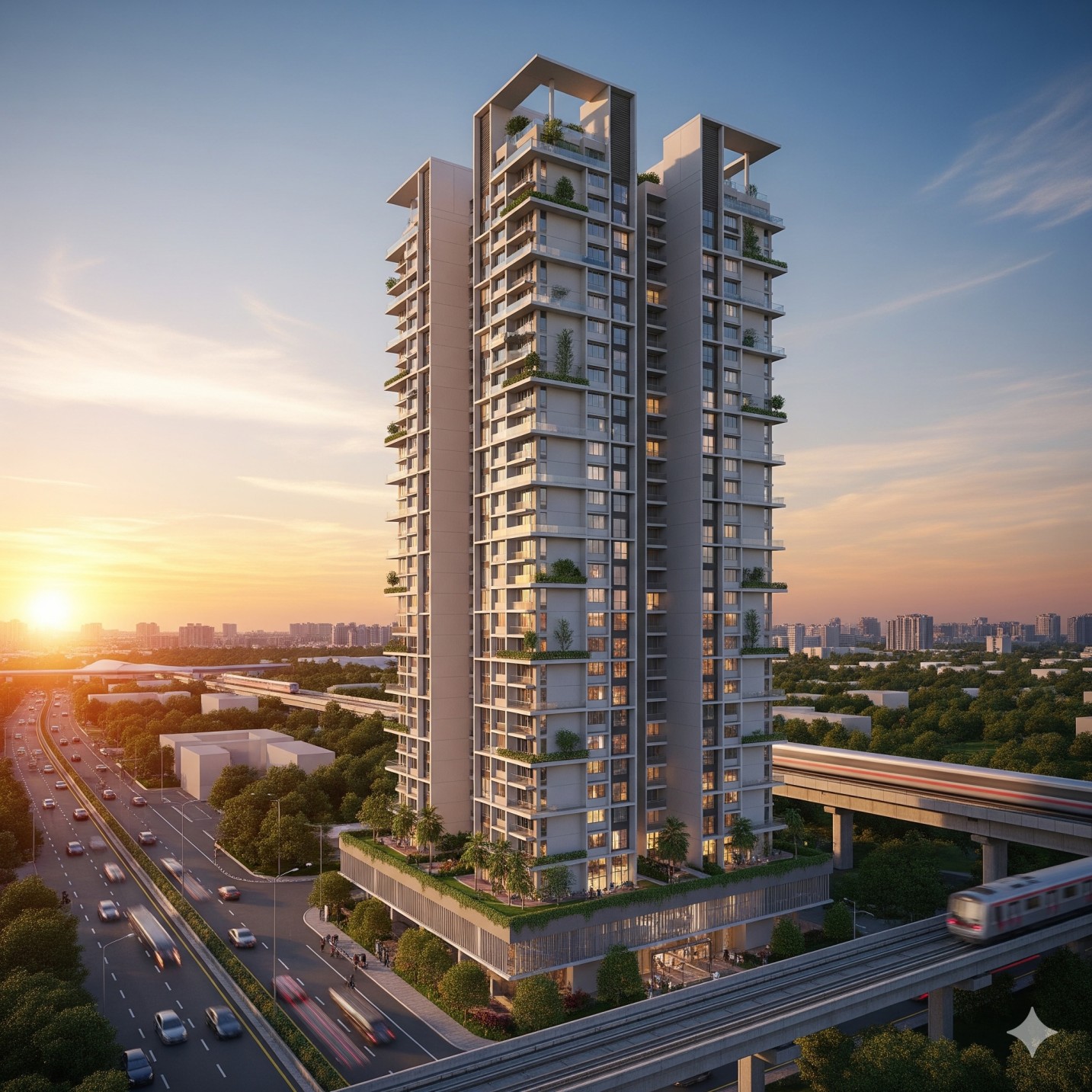
“Delhi-NCR housing sales surged 30% in Q1 2026. Discover why the ultra-luxury segment (₹5 Cr+) is outperforming the mid-market and what compressing rental yields mean for future sustainability.”
📈 The Q1 2026 Sales Surge: A Quantitative Deconstruction
The Delhi-NCR residential market has commenced 2026 with an extraordinary 30% year-on-year growth in sales volume during the first quarter. While a 30% surge on paper suggests a broad-based market recovery, a deeper quantitative forensic examination reveals a highly polarized landscape. This is not a rising tide lifting all boats; rather, it is a structural divergence where capital is aggressively concentrating at the top tier of the market.
Transaction velocity has reached historic highs in the premium segment, with high-end inventory moving off the shelf at twice the speed of mid-market assets. However, this velocity is highly localized, focusing heavily on core micro-markets within Gurugram and select premium corridors in Noida.
⚖️ Structural Polarization: Ultra-Luxury vs. Mid-Market
The defining narrative of Delhi-NCR’s real estate market in Q1 2026 is the widening chasm between the ultra-luxury segment (assets priced above ₹5 Crore) and the mid-market segment (₹1 Crore to ₹2.5 Crore). While the ultra-luxury segment has registered triple-digit growth in specific micro-markets, the mid-market has experienced a volume plateau, weighed down by higher price sensitivity and elevated home loan interest rates.
🚀 Capital Appreciation and Transaction Velocity
In micro-markets like the Golf Course Extension Road, Sector 54, and Southern Peripheral Road (SPR) in Gurugram, capital appreciation has averaged an impressive 18% to 22% annualized. The velocity of transactions for ₹5 Cr+ apartments is unprecedented, with newly launched luxury phases being fully subscribed within days of their soft launch. This indicates a deep-pocketed buyer demographic that is largely insulated from macroeconomic headwinds and interest rate volatility.
📉 Compressing Rental Yields: A Warning Signal?
Despite the rapid rise in capital values, a critical vulnerability is emerging: compressing rental yields. Private rental yields in prime Gurugram condominiums have compressed to historical lows of 2.2% to 2.5%, down from their typical 3.5% range. This yields-to-appreciation divergence is a classic signal of capital-appreciation-led pricing rather than income-backed growth. It suggests that speculative capital, rather than end-user rental demand, is driving the current pricing momentum in premium corridors.
🔍 Wealth Reallocation or Speculative Overheating?
Is this premium demand boom sustainable, or are we witnessing the late-stage symptoms of speculative overheating? The data points to a sophisticated wealth reallocation trend. High-Net-Worth Individuals (HNIs) and Ultra-HNIs are reallocating capital away from volatile equities and low-yielding debt into tangible premium real estate as a hedge against inflation. This structural shift is supported by institutional-grade developers who have consolidated the supply side. However, the compression of rental yields and the rapid entry of short-term speculative flippers in the under-construction luxury segment suggest that select pockets are indeed showing signs of overheating. Investors must exercise strict diligence, focusing on developer execution track records and actual occupational demand.
🔮 Elevate Your Investment Strategy
Navigating a polarized market requires institutional-grade data and forensic precision. Before committing high-ticket capital to the Delhi-NCR market, arm yourself with deep analytical insights.
Visit PropVeda to access our full, comprehensive forensic property report and secure your capital in high-performing, resilient luxury assets.
#DelhiNCRRealEstate #LuxuryProperty #RealEstateAnalysis #PropertyInvestment #PropVeda