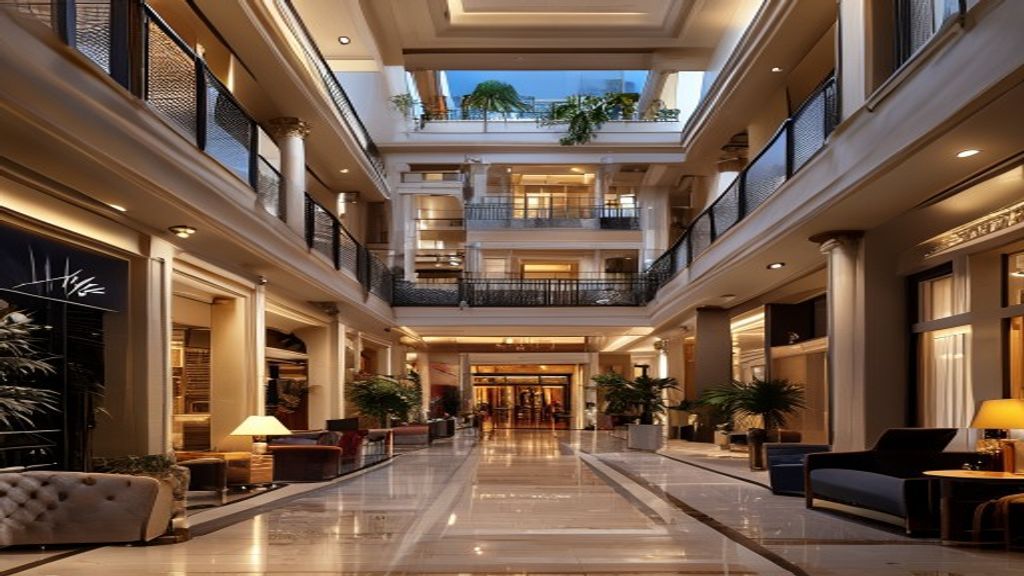
“Max Estates' ₹3,000-crore entry into Ghaziabad marks a structural inflection point for East NCR, driven by transit infrastructure maturity and acute Grade-A developer scarcity.”
For decades, institutional real estate capital in the National Capital Region (NCR) adhered to a rigid geographic dogma: prime allocations gravitated almost exclusively toward Gurugram’s premium arterial belts and Noida’s expressway corridors. East NCR—specifically Ghaziabad—remained categorized as a high-density, mid-to-affordable residential catchment characterized by unorganized developers, fragmented land parcels, and sub-optimal price realizations.
The announcement of Max Estates’ ₹3,000-crore luxury residential development in Ghaziabad shatters this historical paradigm. This deployment represents far more than an opportunistic land transaction; it marks a structural inflection point where Tier-1 governance, Grade-A scarcity, and massive infrastructural upgrades converge to trigger the institutional gentrification of an overlooked micro-market.
🏗️ The Spatial Shift: Institutional Capital Breaches East NCR
Institutional developers have traditionally avoided Ghaziabad due to historical overhangs of legacy defaults, lower average revenue per square foot (ARPU), and an entrenched perception of civic deficits. However, hyper-escalated land costs along Gurugram’s Dwarka Expressway and Southern Peripheral Road (SPR)—where raw land acquisitions now demand steep financial engineering—have compressed developer margins.
As institutional capital seeks risk-adjusted gross development value (GDV) expansion, Ghaziabad emerges as an undervalued frontier. Max Estates’ entry signals that well-capitalized, publicly listed developers are now prepared to deploy balance-sheet strength into East NCR, capitalizing on clean-title, contiguous land parcels that allow for master-planned, low-density luxury execution.
⚡ Infrastructure Arbitrage: The DME and RRTS Multiplier Effect
Gentrification does not occur in a vacuum; it follows hard infrastructure. Ghaziabad has quietly completed the most comprehensive transit transformation in North India:
- Delhi-Meerut Expressway (DME): A 14-lane signal-free corridor that has compressed commuting times between East Delhi, Central Delhi, and Ghaziabad to under 30 minutes, effectively eliminating legacy transit friction.
- Namo Bharat (RRTS): India’s first semi-high-speed Regional Rapid Transit System provides high-frequency, executive-grade intercity connectivity linking Ghaziabad directly to Anand Vihar, Sarai Kale Khan, and Meerut.
- Hindon Civil Enclave & Peripheral Expressways: The operationalization of the Eastern Peripheral Expressway (EPE) has successfully diverted heavy interstate freight traffic, dramatically elevating the liveability index and air quality dynamics of internal micro-catchments.
This dual expressway-rapid transit spine creates an undeniable infrastructure arbitrage. End-users who work across Central Delhi, Connaught Place, and East Delhi commercial nodes can now access institutional-grade housing without tolerating grueling multi-hour commutes.
💎 Supply-Side Scarcity: Unlocking the Grade-A Luxury Realization Premium
The primary structural bottleneck in Ghaziabad was never an absence of affluent demand; it was a total drought of institutional, Grade-A execution. The catchment is populated by affluent industrial entrepreneurs, multi-generational business families from East Delhi/Western UP, and senior corporate professionals who were historically forced to migrate to Central Noida or South Delhi to access bespoke amenities.
By introducing a ₹3,000-crore high-end development, Max Estates is capturing an underserved, captive buyer pool. Project realizations in Ghaziabad’s primary organized sectors have traditionally hovered between ₹5,000 and ₹7,500 per sq. ft. With institutional execution, biophilic design, and integrated wellness infrastructure, realizations can command a premium ranging between ₹11,000 and ₹14,000+ per sq. ft., permanently recalibrating the micro-market's pricing ceiling.
📊 Financial Underwriting: Yields, Land Economics, and Capital Reallocation
From an underwriting standpoint, Max Estates’ allocation represents exceptional capital discipline. Land acquisition economics in East NCR present a rational baseline relative to the hyper-inflated land auctions witnessed in Gurugram (exceeding ₹100 crore per acre) and Sector 44/Noida Expressway micro-markets.
Acquiring scalable acreage at an accretive basis allows the developer to allocate more capital toward construction quality, low-density floor-area ratios (FAR), and expansive open landscapes. The projected ₹3,000-crore top-line GDV demonstrates strong return on capital employed (ROCE), setting a compelling precedent that will inevitably attract competing Tier-1 developers—such as Godrej Properties, DLF, and Tata Housing—into the micro-market.
🎯 PropVeda Strategic Outlook: The East NCR Gentrification Curve
The structural rerating of Ghaziabad is no longer speculative; it is actively underway. As institutional developers introduce disciplined delivery timelines, transparent escrow mechanisms, and elevated architectural design, the micro-market will undergo a rapid repositioning cycle similar to Whitefield in Bengaluru during the early 2010s or Sector 150 in Noida during 2018–2020.
For ultra-high-net-worth individuals (UHNIs), discerning end-users, and family offices, the early entry window into institutional East NCR assets offers an asymmetric risk-reward profile: lower basis cost, immediate infrastructural dividends, and substantial long-term capital appreciation headroom.
For comprehensive, forensic property underwriting, institutional land valuations, and tailored investment advisory across high-growth NCR corridors, explore our predictive analytics models at PropVeda.
#RealEstateInvesting #MaxEstates #GhaziabadRealEstate #NCRInfrastructure #InstitutionalRealEstate