“A deep macroeconomic analysis of India's top-performing real estate markets in 2026, exploring how public infrastructure capital expenditure and talent migration are driving asymmetric capital appreciation for HNWI investors.”
The 2026 Indian Real Estate Divergence: A Strategic Playbook for HNWI Asset Allocation
The Indian residential real estate market in 2026 is characterized by a profound structural divergence. Capital appreciation is no longer a tide that lifts all boats. Instead, we are witnessing a highly localized, infrastructure-led transformation where select micro-markets across India's top 10 cities are dramatically outperforming legacy premium nodes.
For high-net-worth individuals (HNWIs) and institutional allocators, this divergence demands a departure from traditional city-level strategies. Success in the current cycle requires a deep understanding of multi-city macroeconomic catalysts, specifically the intersection of infrastructure-led public capital expenditure and domestic corporate talent migration.
🏗️ The Capital Expenditure Catalyst: Infrastructure-Led Premiumization
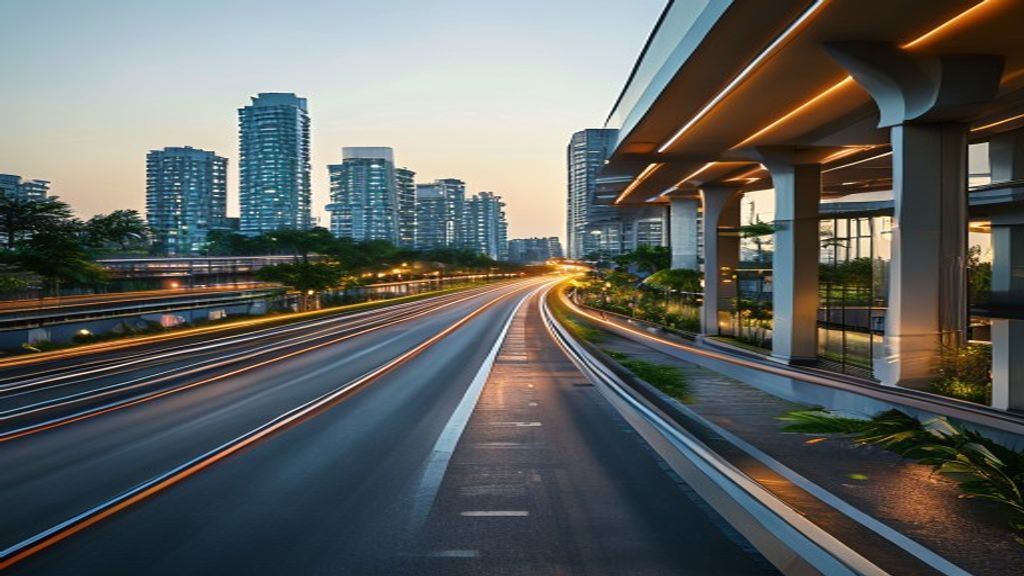
In 2026, the primary driver of capital appreciation is no longer the historical prestige of an address, but its proximity to major transit-oriented development (TOD) infrastructure. Large-scale public works—including regional rapid transit systems, metro expansion corridors, and peripheral expressways—have fundamentally rewritten commute dynamics across tier-1 metros.
🚇 Transit-Oriented Development and Asset Repricing
Areas that were once considered peripheral suburban markets have transitioned into highly coveted residential enclaves. By compressing travel times to primary employment centers, new transit networks have unlocked land value in outlying sub-markets. Developers have responded by launching ultra-premium, low-density projects designed for affluent buyers who prioritize wellness and space over proximity to legacy downtown areas.
This infrastructural shift has led to an asymmetric repricing of residential assets. Micro-markets connected to major arterial infrastructure projects are experiencing capital appreciation rates that outpace their land-locked, central-business-district counterparts by up to 150 basis points.
💼 The Talent Migration Wave: Re-Aligning Wealth Corridors
Complementing the infrastructure boom is the continuous migration of high-earning professionals across India's corporate corridors. We are seeing a marked concentration of executive talent in cities that offer robust technological infrastructure, premium social amenities, and high-quality lifestyle environments.
🏢 The Rise of Specialized Multi-Sector Clusters
The traditional IT-centric migration pattern has evolved. Today, cities are diversifying into highly specialized hubs. Bengaluru continues to draw global deep-tech capital, while Hyderabad's pharmaceutical and financial districts have catalyzed a massive luxury housing boom. Concurrently, the Delhi-NCR micro-markets of Gurugram and Noida are absorbing a significant wave of corporate headquarters, driving premium demand.
This demographic shifts have created highly resilient rental yields and robust capital growth in specific micromarkets. It has also catalyzed the development of premium social infrastructure—such as international schools, elite healthcare facilities, and high-end retail options—which further cements the capital appreciation loop of these neighborhoods.
🗺️ The 2026 Metro Growth Matrix: Where the Smart Capital is Flowing
Our analysis of the top 10 appreciating markets reveals that the steepest growth curves are concentrated in cities that successfully synthesize infrastructure development with talent absorption. The absolute leaders in 2026 capital appreciation are not necessarily the most expensive markets, but those offering the highest rate of infrastructure-driven yield transformation.
📈 Key Growth Corridors in Focus
- Bengaluru (Outer Ring Road & North Corridors): Driven by proximity to the international airport and upcoming metro extensions, these sub-markets continue to lead the country in premium price appreciation.
- Mumbai Metropolitan Region (MMR East & Peripheral Nodes): Enabled by trans-harbor connectivity and metro expansions, previously industrial or peripheral areas are seeing a premium residential resurgence.
- Delhi-NCR (Southern Peripheral Road & Dwarka Expressway): These high-speed connectivity corridors have captured the lion's share of premium institutional residential investment in 2026.
By shifting focus from general municipal boundaries to these high-growth corridors, discerning investors can capture superior alpha while mitigating cyclical downside risks.
🛡️ The PropVeda HNWI Asset Allocation Framework
In a bifurcated market, defensive asset allocation is as crucial as capturing capital upside. A sophisticated real estate portfolio must balance core, yield-generating properties in established hubs with opportunistic investments in high-growth infrastructure corridors.
At PropVeda, we recommend a disciplined, data-first approach that analyzes micro-market liquidity, developer execution track records, and municipal development timelines. Understanding when an infrastructure project transitions from the proposal phase to execution is critical for timing entry points and maximizing return on equity.
To access our complete proprietary quantitative models, yield-mapping matrices, and deep-dive micro-market analyses, visit PropVeda for the full forensic property report.
#IndianRealEstate #HNWIInvestment #Macroeconomics #PropTech #PropertyAppreciation